
Telical Books
Books On Philosophy, Art, Religion, Psychology and Computer-Aided Brainstorming
| Home |
| Publications |
| Vintage Reprints |
| About Us |
| Related Links |
| Order Online |
 |
 |
 |
 |
Publications


Meditations on Christian Revival - Spiritual Revival in So-Called Post-Christian Lands is the product of many years of reflection on the topic of what could cause a true Christian revival in so-called Post-Christian cultures. The author is not a part of the "dumbing down" of culture, but has been a rare book dealer among having other livelihoods.
Click here download a sample of selections (PDF)

Grandiosity and the Empowerment of the Spiritual and Artistic is the third in this three book series on documenting the major problems that can happen to people interested in religious ideas. This time the subject matter also includes problems that artists encounter. These three books have a cross cultural appeal since many are interested in spirituality, while others are concerned about the problems that religious beliefs can create.
Click here download parts of the book (PDF)
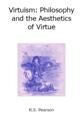
Virtuism: Philosophy and the Aesthetics of Virtue is about the aesthetics of human virtue, how virtuous acts produce in us the same experience as great works of art. Witnessing or creating a virtuous act produces the aesthetic experience. The giving of the good feeling of the aesthetic or "art" experience gives evidence that life has a higher meaning. The book "Virtuism: Philosophy and the Aesthetics of Virtue" discusses other philosophical implications of this relationship.
Click here download the preface (PDF)
Hyperreligiosity: Identifying and Overcoming Patterns of Religious Dysfunction. Hyperreligiosity is when the outward forms and other aspects of religion become life disabling. There is a direct connection between hyperreligiosity and terrorism or destructive cults. Hyperreligiosity is the ill-fitting grasp of the role of religion and God in one's life. It is the disability that can lead to isolation from others because one thinks God is vengeful and punishing.
Click here to download the introduction (PDF)
The Experience of Hallucinations in Religious Practice is a book that helps distinguish what is a spiritual experience and what may be merely a type of dream phenomena or hallucination. The author discusses how some religious and so-called esoteric experience takes place in the state of consciousness within the brain that is similar to the dream state in human beings.
Click here to download the introduction (PDF)
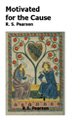
Motivated for the Cause was finished when Robert Pearson (pen name, R.S. Pearson) was barely 22, back in June of 1985. He wanted to put into the book the "boundless hopes and ideals of youths" because he realized that such are often lost as one fully matures into the adult world. "Motivated for the Cause" is written in the unusual literary form called the "anti-novel."
Click here to download the introduction (PDF)
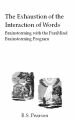
The Exhaustion of the Interaction of Words: Brainstorming with the ParaMind Brainstorming Program describes an interesting theory in the possibilities of thought. If we exhausted all the different interactions of words, would we come up with every idea possible for us? ParaMind Brainstorming Software, created by a Seattle company founded in 1992, is a tool that automates these word interactions.
Click here to download the introduction (PDF)

